


What it is, what forms it takes, and how to improve color perception
Color blindness
Color blindness, or dyschromatopsia, is an alteration in the ability to correctly distinguish certain colors. In most cases, it is an hereditary condition, linked to an abnormal functioning of the retina's photoreceptors called cones, which allow us to perceive shades of red, green, and blue.
Although it does not compromise visual acuity, color blindness can make activities that require precise color recognition more difficult, such as reading maps, choosing clothes, using charts, or driving.
There are different forms of color blindness, each linked to a different type of cone that does not function correctly. The three main types of dyschromatopsia are deuteranopia, protanopia, and tritanopia.

Green perception deficit
Deuteranopia
Deuteranopia is a form of red-green color blindness caused by the absence or malfunction of "green" cones (M-cones).
Key characteristics:
• difficulty distinguishing green, brown, orange, and yellow;
• green tones appear duller or are confused with reds;
• it is one of the most common forms, along with protanopia;
• it can make it difficult to interpret traffic lights, maps, and colored indicators.
Many people with deuteranopia only discover their deficiency through specific tests.

Red Perception Deficit
Protanopia
Protanopia is also a red-green color vision deficiency, but it involves the absence of function of the "red" cones (L-cones).
Main characteristics:
• reduced perception of red, which may appear brown or darker;
• confusion between red, green, and brown;
• difficulty with warm tones and orange hues;
• altered perception of brightness, because red contributes to the perception of brilliance.
Protanopia is less common than deuteranopia but generates a more marked chromatic distortion in the red range.

Blue color perception deficit
Tritanopia
Tritanopia is a rarer form of color blindness and involves the "blue" cones (S-cones).
Key characteristics:
• difficulty distinguishing between blue and yellow;
• tendency to confuse blue with green and yellow with pink;
• can be congenital but is often acquired due to ocular causes (cataracts, glaucoma, retinal degeneration);
• affects less than 1% of the population.
It is a particularly relevant form in adults, as it can indicate physiological or pathological changes in the retina.

keratoconus
Common Symptoms of Color Blindness
Regardless of its form, color blindness manifests as:
• difficulty distinguishing colors that others perceive easily;
• colors appearing "duller" or altered;
• confusion between similar shades;
• problems recognizing color codes (maps, graphs, indicator lights);
• eye strain, especially on digital displays.
Many individuals are unaware of the deficit because they learn to compensate naturally.
advanced optical solutions
Glasses for the colorblind
Although color blindness is not curable, today there are optical solutions that improve color discrimination.
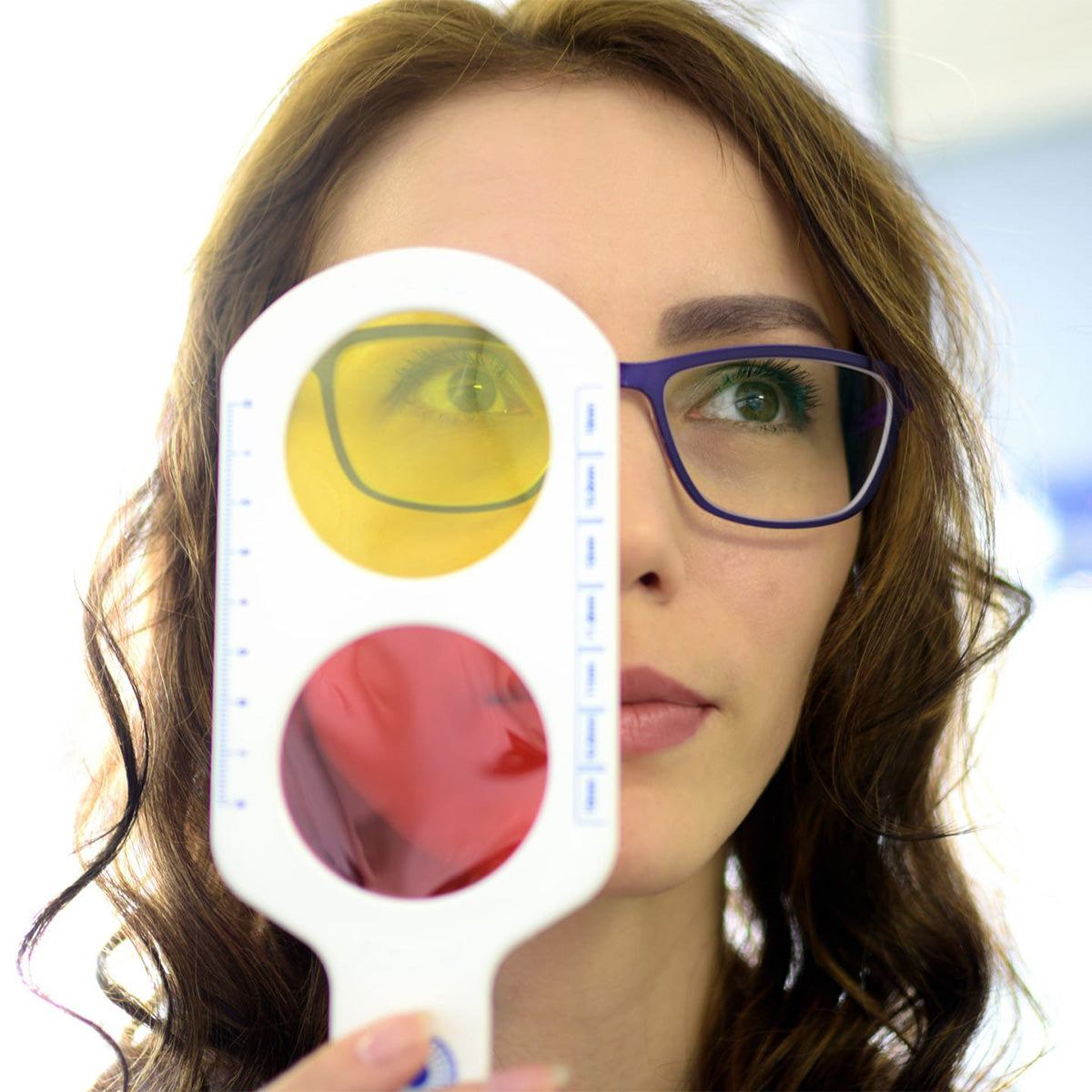
Glasses with filters for the colorblind (such as EnChroma and similar technologies)
These glasses use calibrated photoselective filters to:
• increase contrast between confused shades;
• reduce overlap between distortion-causing wavelengths;
• improve perceived saturation;
• clarify the difference between red-green or blue-yellow, depending on the type of dyschromatopsia.
They do not permanently alter vision but enhance color perception, making it easier to distinguish colors in daily life.
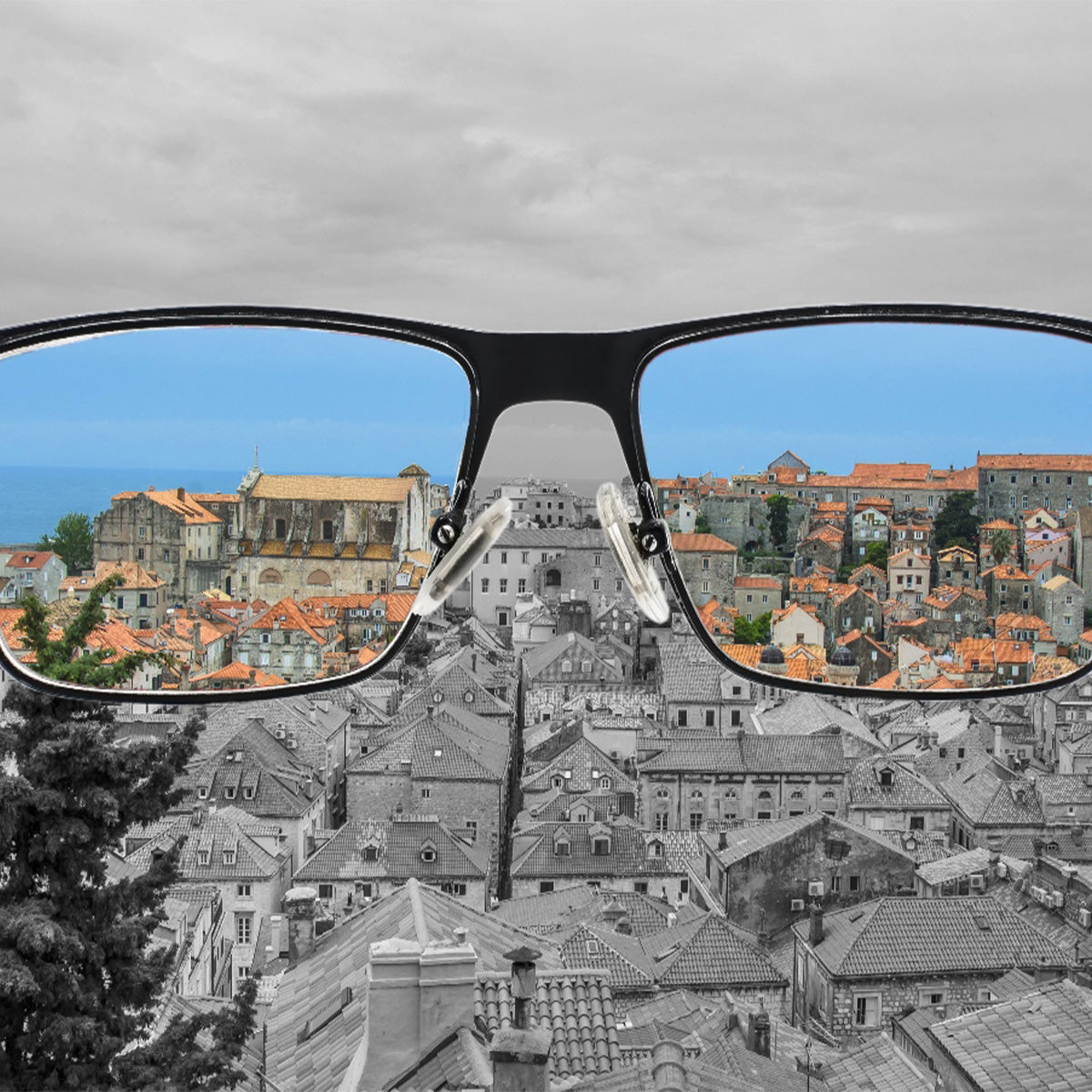
Professional tests to identify the type of color blindness
At Più Ottica centers, it is possible to perform:
• Ishihara Plates for deuteranopia and protanopia;
• Farnsworth-Munsell 100 Hue Test to measure color accuracy;
• specific tests to distinguish tritanopia from hereditary red-green forms;
• advanced optometric evaluations for acquired dyschromatopsia.
Correctly identifying the type of color blindness allows us to recommend the most effective optical filter.
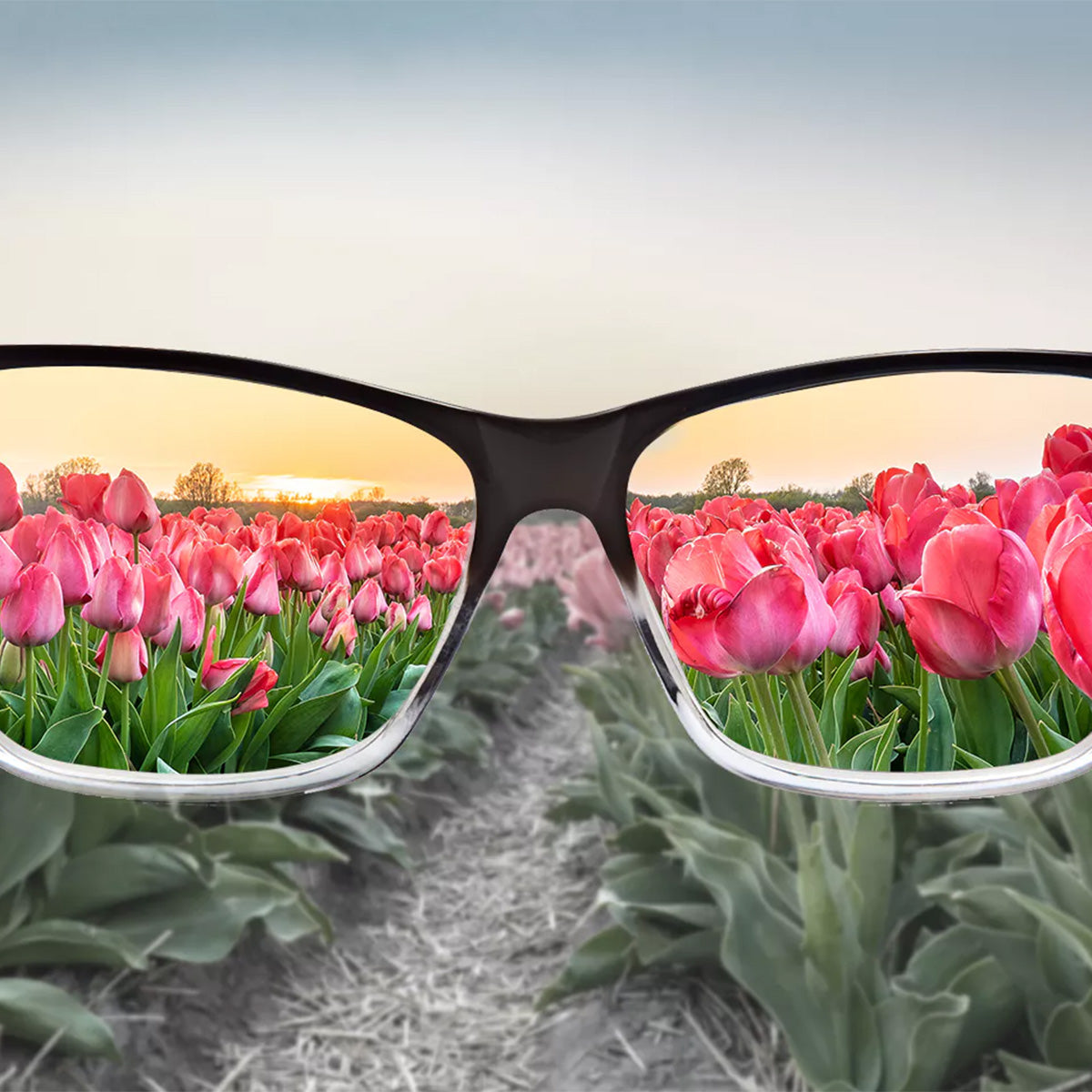
Custom solutions for every color blindness
Based on the specific form (deuteranopia, protanopia, or tritanopia), we can offer:
• colorblind glasses calibrated to the type of deficiency;
• filtering sunglasses to increase contrast and color definition;
• computer lenses with selective filters to improve digital vision;
• customized support for professional needs (graphics, design, technical work).
Solutions vary from person to person because each color deficiency has a different intensity and manifestation.

Improves color perception
Trust the professionals at Più Ottica
Color blindness can affect daily life, but thanks to modern optical filters, it is now possible to significantly improve color distinction and visual quality.
Book a professional color test now with the specialists at Più Ottica to identify your type of dyschromatopsia and choose the most effective optical solution, customized to your needs.
FREQUENTLY ASKED QUESTIONS
CURIOSITY
Color blindness, or dyschromatopsia, is an alteration in color perception due to an abnormal functioning of the retinal cones, the photoreceptors responsible for color vision. In most cases, it is a hereditary condition and does not impair visual acuity, but it makes it difficult to distinguish certain shades, particularly red, green, or blue, affecting various daily activities.
The most common forms of color blindness are deuteranopia (difficulty perceiving green), protanopia (deficiency in perceiving red), and tritanopia (a rarer alteration involving blue). Each form involves a different color distortion and can manifest with varying intensity. Correctly identifying the type of dyschromatopsia is essential to finding the most suitable optical solution.
Yes. At Più Ottica centers, we offer glasses with specific photoselective filters for color blindness, designed to increase contrast between confusing shades and improve color discrimination. These solutions do not cure color blindness but help to better perceive differences between colors, making activities such as reading charts, driving, and using digital devices easier. The filters are chosen based on the type of dyschromatopsia and individual needs.
MASTER OPTICIAN
ENNIO SCAUZILLO
Ennio is a Master Optician, a title he earned in Florence in 2018, with over fifty years of experience in the world of optics. He qualified as an optician at the prestigious Vinci (Florence) School of Optics. Renowned for his professionalism, kindness, and sensitivity, Ennio is often consulted for personalized advice and delicate optical solutions.

We recommend that you consult your ophthalmologist for an accurate assessment and detailed information, especially if you have acute or particularly bothersome symptoms.